

Irish Women Artists: Seven Painters Who Changed Irish Art
For a long time the standard story of Irish art ran through a familiar list of men: Barry, Maclise, Osborne, Orpen, Lavery, Jack Yeats. The women were there all along, though, painting, exhibiting, teaching and, quite often, building the institutions the men later took for granted. Here are seven Irish women artists whose work is worth knowing, and worth living with.
Sarah Purser (1848–1943): the organiser
Sarah Purser trained at the Académie Julian in Paris and came home to become one of the most sought-after portraitists in Dublin. Her early work shows what she learned in France: Le Petit Déjeuner (1881) is a quiet, cool-toned study of a woman at a café table that would sit comfortably beside the French Realists.
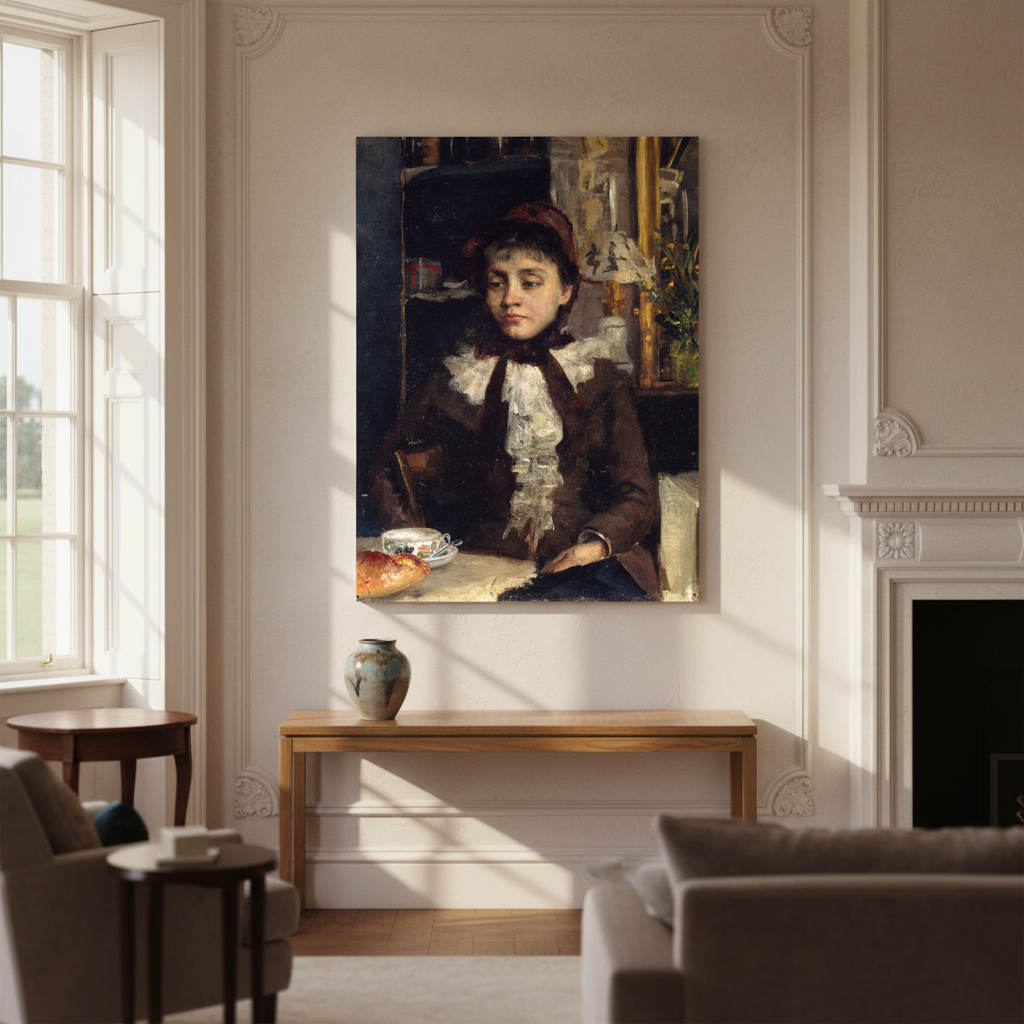
Her bigger legacy is what she built. In 1903 she founded An Túr Gloine, the Tower of Glass, a stained-glass co-operative in Dublin that let Irish artists make windows at home instead of importing them. In 1924 she became the first woman elected a full member of the Royal Hibernian Academy. She was in her mid-seventies.
Rose Barton (1856–1929): the watercolourist of city streets
Rose Barton painted Dublin and London in soft, misty watercolour: carriages in the rain, crowds on the pavement, gaslight on wet stone. She studied in Paris under Henri Gervex, alongside her friend Mildred Anne Butler, and picked up something of the Impressionists' feeling for weather and atmosphere. In 1911 she became the first woman elected a full member of the Royal Watercolour Society in London.
Her Dublin pictures record a city that has half vanished. See them in the Rose Barton collection, including her views of Dublin Castle.
Mildred Anne Butler (1858–1941): the painter of Kilmurry
Mildred Anne Butler spent most of her life at Kilmurry, her family's house in County Kilkenny, and painted its gardens, rooks, cattle and doves again and again. That sounds like a small world; the results are not small. Her watercolour The Morning Bath was bought by the Chantrey Bequest for the Tate in 1896, a rare honour for a woman artist at the time. Her light-filled garden scenes are some of the most natural, unforced pictures of Irish country life from the period.
Helen Mabel Trevor (1831–1900): the late starter
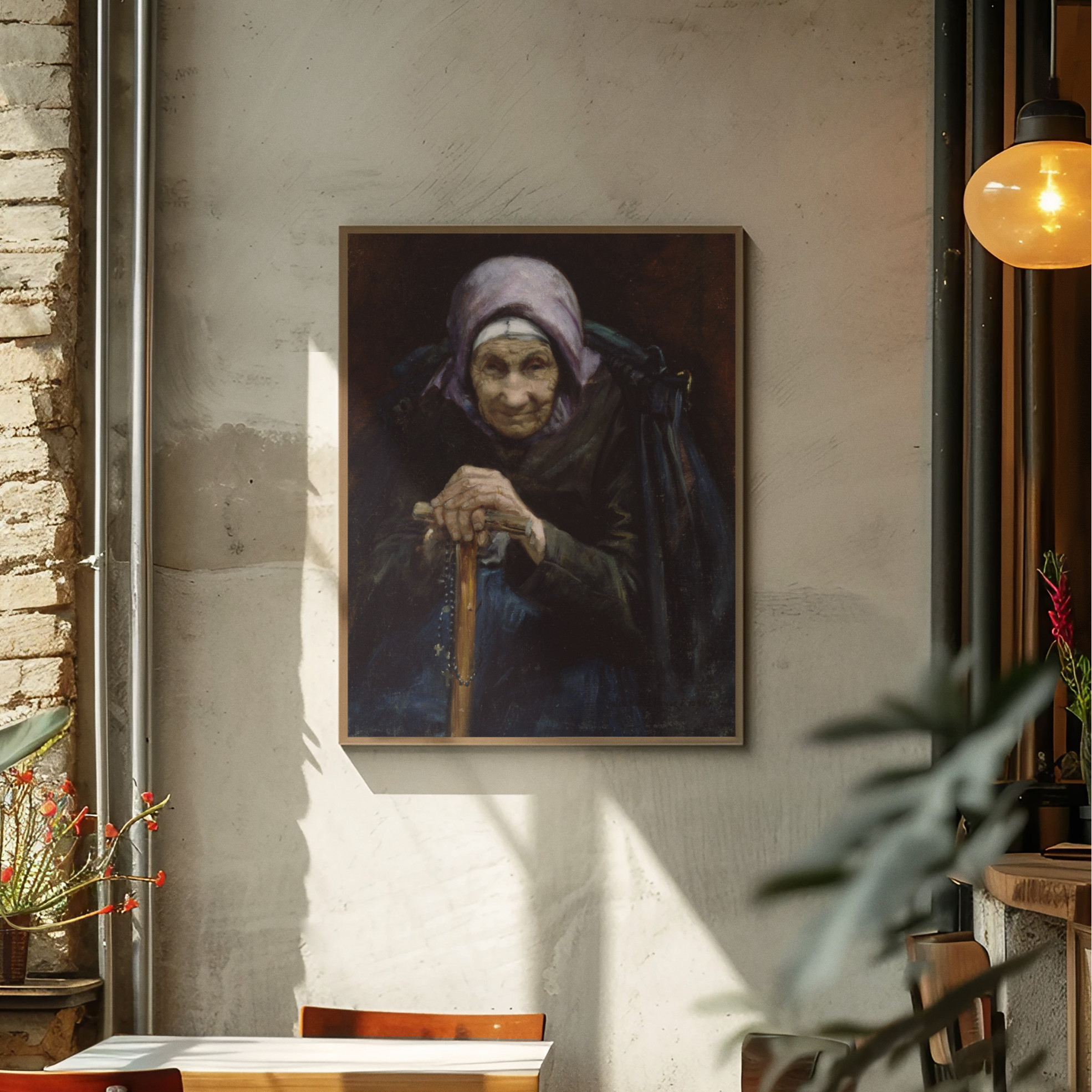
Helen Mabel Trevor, from Loughbrickland in County Down, was largely self-taught until her mid-forties. After her father's death she enrolled at the Royal Academy Schools in London, then moved to Paris and spent the rest of her life working in France and Italy. Her best-known painting, The Fisherman's Mother, was painted in Brittany in 1892. Trevor wrote home that her sitter was an old woman with five sons, all fishermen. The picture was shown at the Paris Salon, and Trevor left it to the National Gallery of Ireland.
Sarah Cecilia Harrison (1863–1941): artist and activist
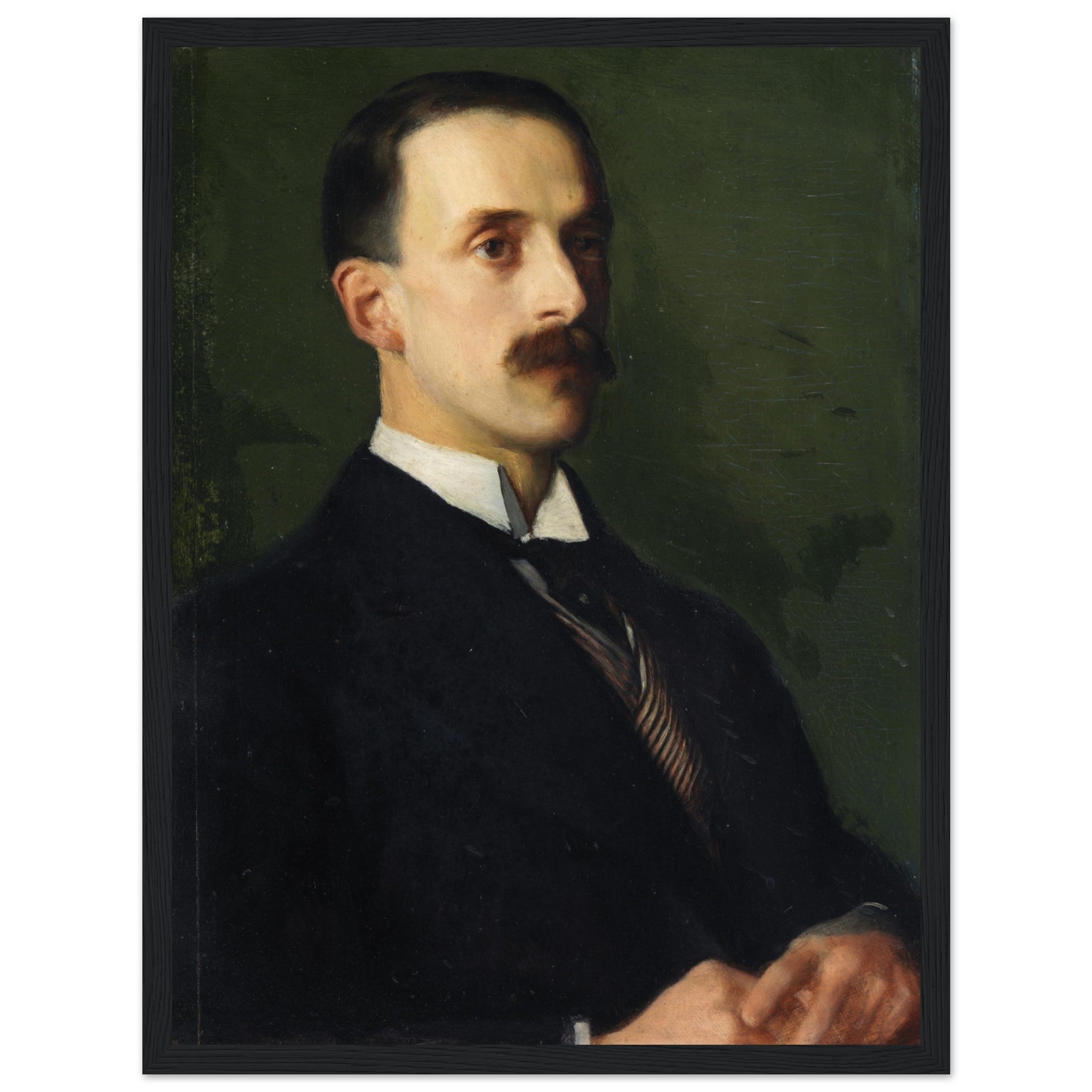
Born in Holywood, County Down, Sarah Cecilia Harrison trained at the Slade in London and became one of Dublin's leading portrait painters. She was also a campaigner. In 1912 she became the first woman elected to Dublin Corporation, where she worked on behalf of the city's poor.
She was a close friend of Hugh Lane and backed his plans for a gallery of modern art in Dublin. Her portrait of Sir Hugh Lane is a steady, sympathetic likeness. After he died on the Lusitania in 1915, she spent years campaigning for his disputed bequest of pictures to come to Dublin.
Mainie Jellett (1897–1944) and Evie Hone (1894–1955): the modernists
These two friends went to Paris in the early 1920s to study with André Lhote and then Albert Gleizes, and came back committed to Cubism and abstraction. In 1923 Jellett showed two abstract paintings with the Society of Dublin Painters, among the first seen in Ireland. The critic George Russell (Æ) was not impressed, and said so in print. Jellett spent the next twenty years arguing, teaching and exhibiting until modern art had a foothold in Dublin, and helped found the Irish Exhibition of Living Art in 1943, a year before her death.
Evie Hone carried the same ideas into stained glass, joining An Túr Gloine in 1933, so Purser's workshop links the generations. Her east window at Eton College Chapel is one of the finest pieces of twentieth-century glass in these islands. For the paintings, browse the Mainie Jellett collection.
Bringing their work home
What links these seven is that each made serious work inside a system that was not built for them, and several changed that system along the way. Their pictures are also very good to live with. Barton's misty streets and Butler's gardens suit a calm room; Purser's and Harrison's portraits give a hallway or study some character; a Jellett abstract brings colour to a modern space.
You'll find all of them, alongside Ireland's other great painters, in our Irish art prints collection.