
Wall Sets — Prints That Hang Together
The largest orders we ship are rarely one picture. They are two or three, at one size, that belong together — the same hand, the same place, or the same procedure. These are the fifteen sets in the catalogue that genuinely hang as a group, with the reason each one does. Every print is open edition, made to order, and can be bought one at a time; the set page is there so you can see the wall before you buy the first piece.
 The Glens of Antrim16 prints
 Mainie Jellett25 prints
 Lavery — Tangier and the Riviera11 prints
 Lavery — Hazel and the Sitters10 prints
 Lavery — Summer, Sport and the Sands11 prints
 Mildred Anne Butler5 prints
 Frederic William Burton10 prints
 James Arthur O’Connor5 prints
 The Writers’ Wall11 prints
 Irish Music — The Portraits10 prints
 Irish Patriots10 prints
 The Irish Word Prints8 prints
 Irish Proverb Prints13 prints
 Irish Posters8 prints
 Black & White Ireland6 prints
How to hang three
Three at matching size, in a row, with the gap between frames about the width of a hand. Unframed, the sizes step up cheaply — 30 × 40 cm is €75 and 45 × 60 cm is €90 — so a trio at the entry size costs about the same as one large framed piece. Framed, the arithmetic turns: two framed 30 × 45 cm prints (€330) cost less than one framed 60 × 90 cm (€440), and fill more wall.
The sets
The Glens of Antrim (16 prints)
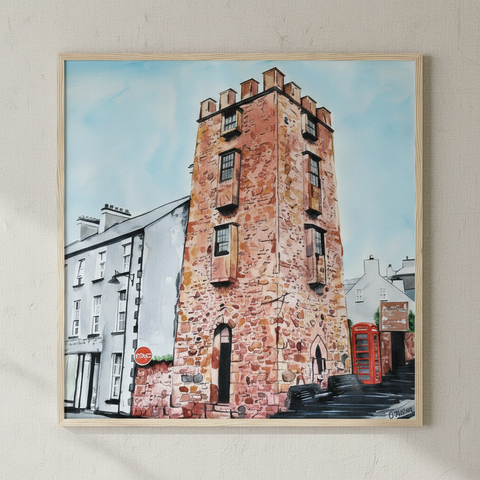
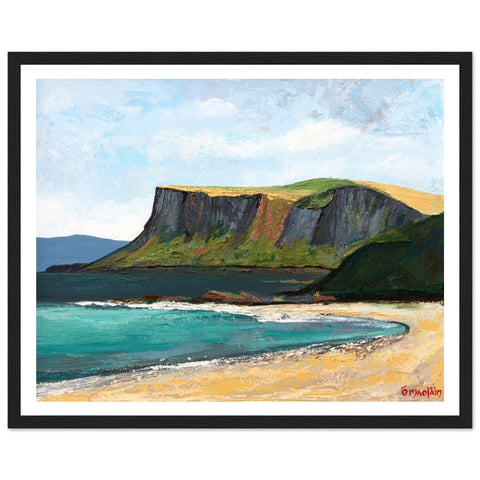
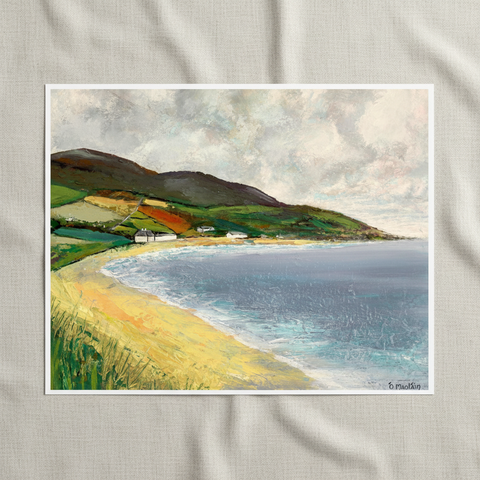
Nine glens run down to the Antrim coast between Glenarm and Glentaisie, and almost everything here was painted within a few miles of one crossroads. Cushendall sits under Lurigethan, the flat-topped basalt mountain that closes the village to the south; Francis Turnly built the Curfew Tower at the crossroads in the early nineteenth century as a lock-up, taking the design from watchtowers he had seen while working for the East India Company in China. North of it, Fair Head — An Bhinn Mhór, the great cliff — drops more than a hundred metres of dolerite columns into the sea. These are not separate views. They are one place from different positions, which is why they hang together.
Mainie Jellett (25 prints)
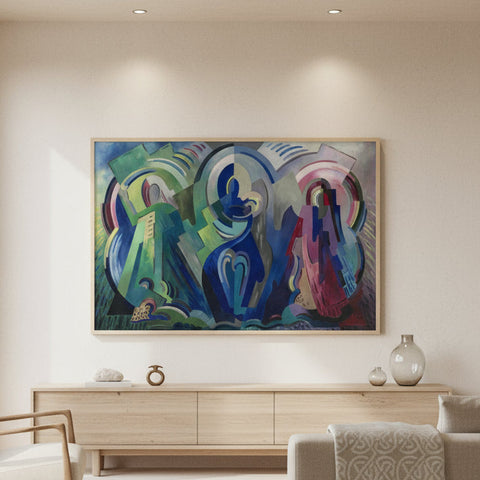
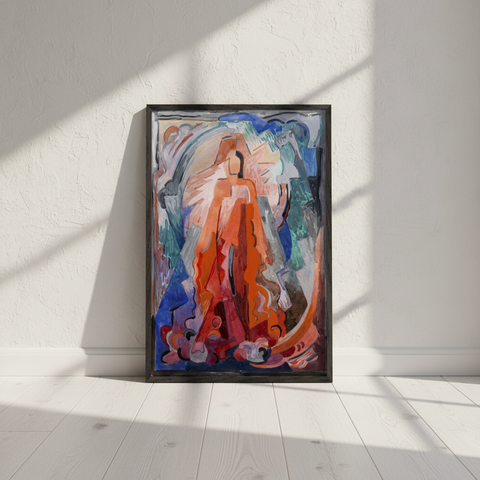
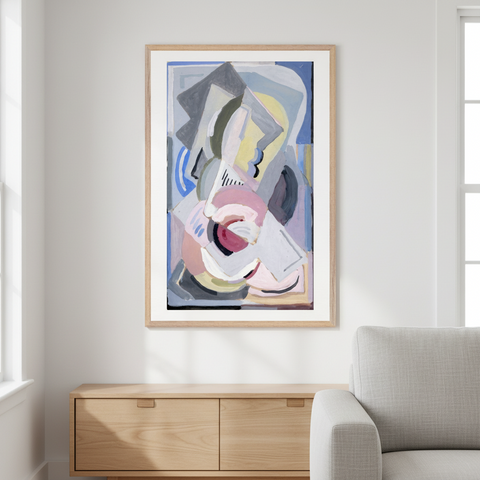
Jellett followed Evie Hone to Paris in 1921 and worked under André Lhote, then Albert Gleizes, who had never taken pupils before. What Gleizes gave her was not a style but a procedure: take a shape, translate it across the picture, rotate it, repeat. Every one of these is that procedure run again. Alone they read as decoration; together they read as the working-out. She showed the first of them at the Society of Dublin Painters in 1923, and the Irish Times critic wrote that “to me they presented an insoluble puzzle.”
Lavery — Tangier and the Riviera (11 prints)
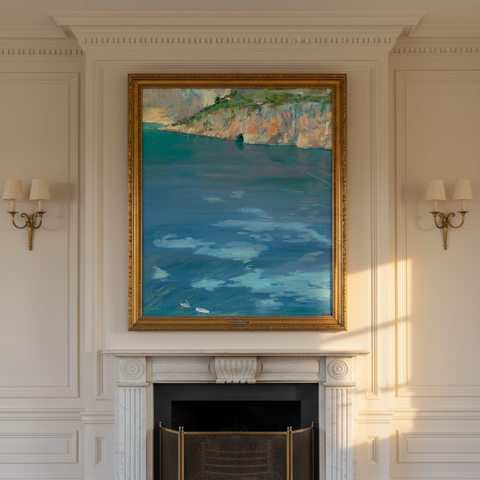
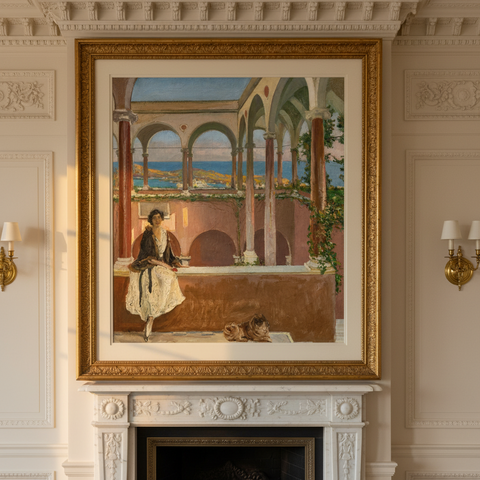
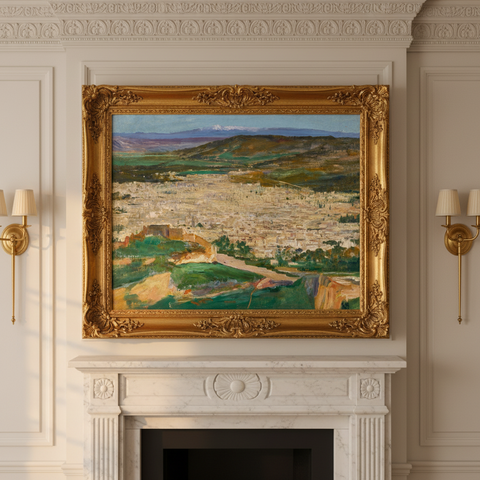
Lavery first went to Tangier in the winter of 1890–91 and painted from the roof of the Hotel Continental; in 1903 he bought Dar-el-Midfah, the House of the Cannon, on the hill above the town, and wintered there most years until the war. The Riviera came later — February 1921, at Cap d’Ail, introduced by Churchill, who wrote that Lavery “shows us sunlight in all its variety”. Lavery’s own phrase for the work was plainer: “getting on with some canvases of sunshine”. One light, three coasts, and the same unhurried hour of the day.
Lavery — Hazel and the Sitters (10 prints)
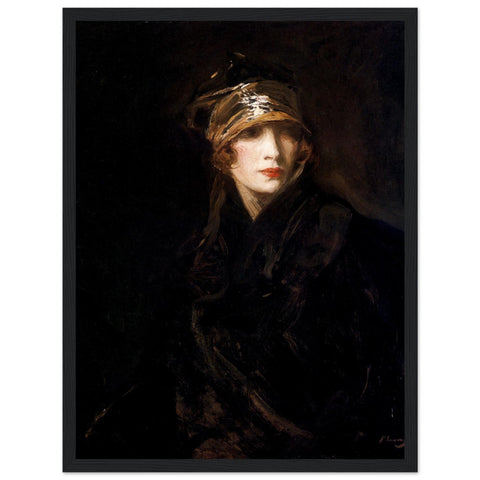
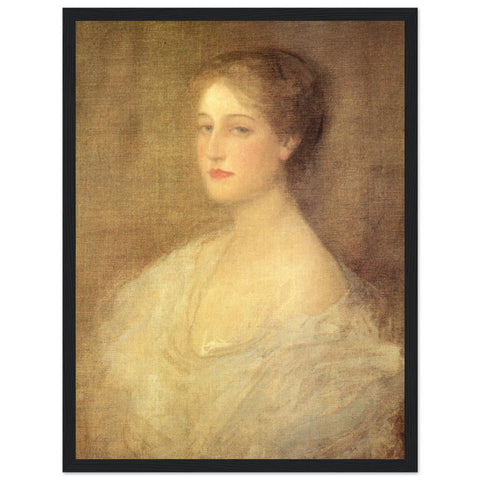
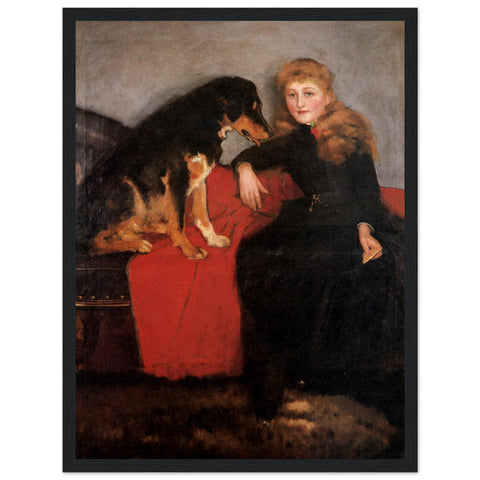
Hazel Martyn, born in Chicago in 1880, married Lavery in 1909 and sat for him more often than anyone else. Sir John Lavery’s portrait of his wife Hazel as Kathleen Ní Houlihan appeared on the Irish Free State’s Series A banknotes, first issued in 1928 and printed until 1977. Hazel in Rose and Grey (1922) is in the Guildhall Art Gallery in London. The other sitters here were painted in the same studio register, at the same scale, and hang beside her without argument.
Lavery — Summer, Sport and the Sands (11 prints)
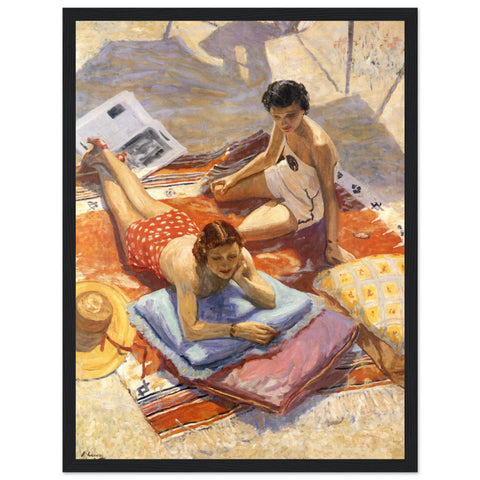
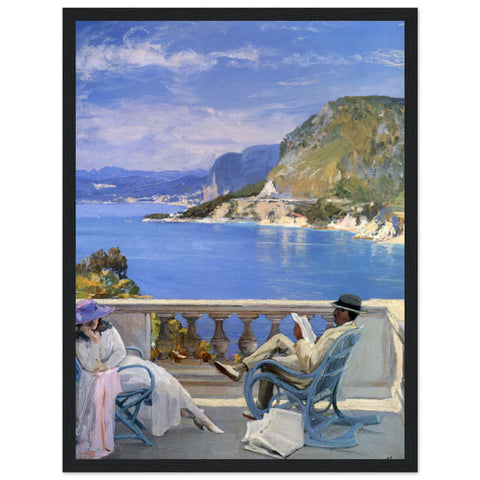
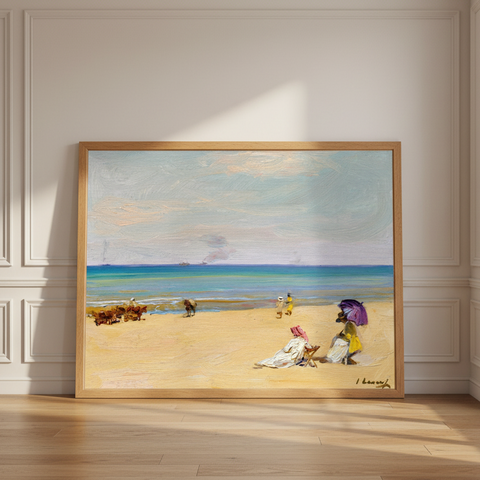
In the summer of 1885 Lavery painted The Tennis Party at Cartbank, near Glasgow — it is in Aberdeen now — and A Rally and Played!! beside it. Forty-four years later he was back at the net, at the Hôtel Beau Site in Cannes. In between came the Glasgow exhibition of 1888, whose small pictures won him the commission to paint the Queen’s state visit, Florida in the winter of 1926–27, and the sunbathers of Palm Springs in 1936, painted at eighty. The subject never changed: people at their ease, in strong light.
Mildred Anne Butler (5 prints)
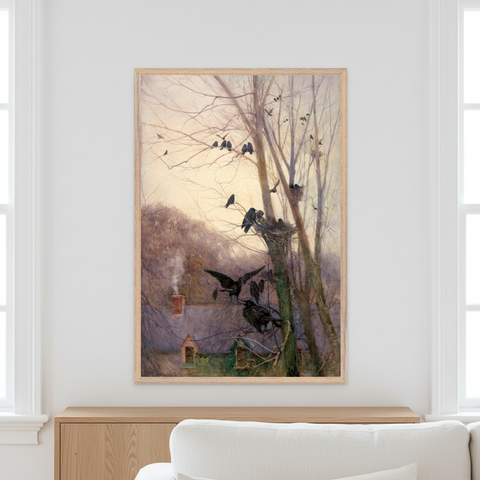
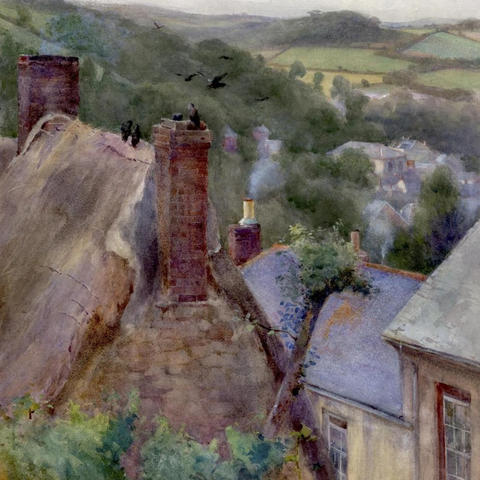
Butler was born at Kilmurry, near Thomastown in County Kilkenny, in 1858, and died there in 1941. The house and its garden were her subject for most of a working life — the rooks, the doves, the trees, the yard, the light going. She learned watercolour from Paul Jacob Naftel in London and spent two summers at Newlyn with Norman Garstin, and kept coming back to the same acre of ground. The garden watercolours were rarely exhibited while she lived; most became public only after the contents of Kilmurry were sold in the 1970s. Hung together they are what they always were — one garden, painted over and over.
Frederic William Burton (10 prints)
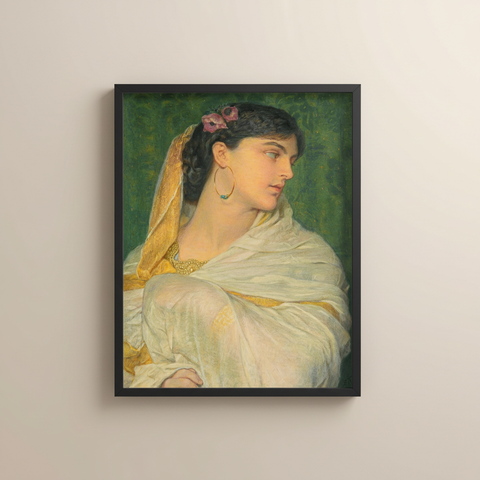
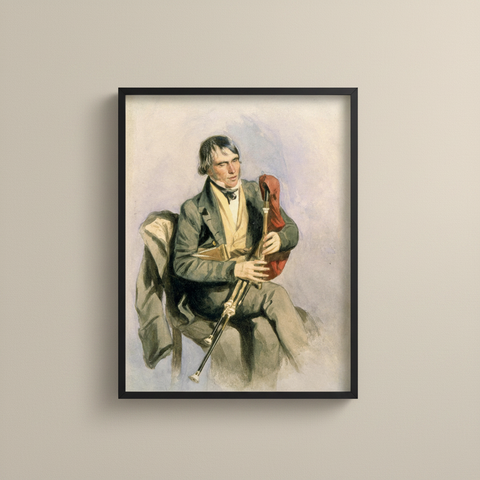
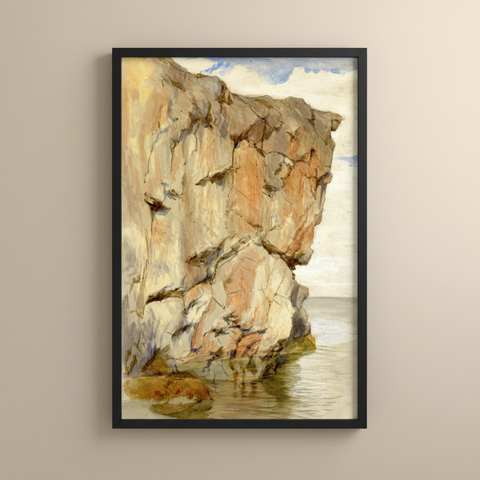
A childhood injury left Burton’s right arm permanently disabled, and he could not tolerate the smell of oil paint — which is why the best-loved Irish picture of the nineteenth century is a watercolour on paper. The Meeting on the Turret Stairs hangs in the National Gallery of Ireland and is shown two hours a week, in a light-protective cabinet, to a queue. The rest here is the same hand and the same medium: the Kerry and Howth drawings, the Galway piper, the portrait heads. Burton stopped painting altogether in 1874 when he was made Director of the National Gallery in London, and never started again.
James Arthur O’Connor (5 prints)
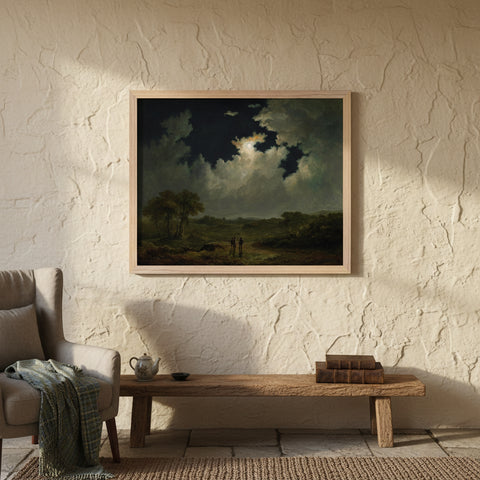
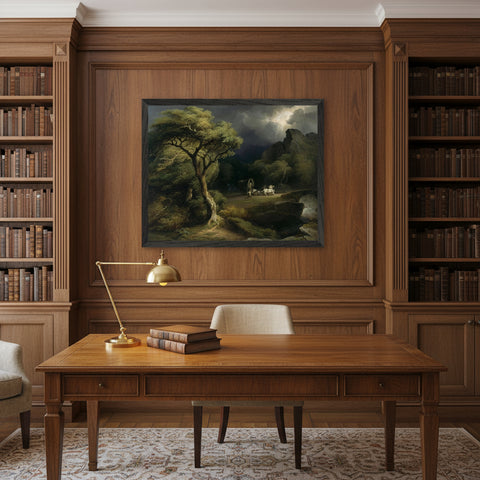
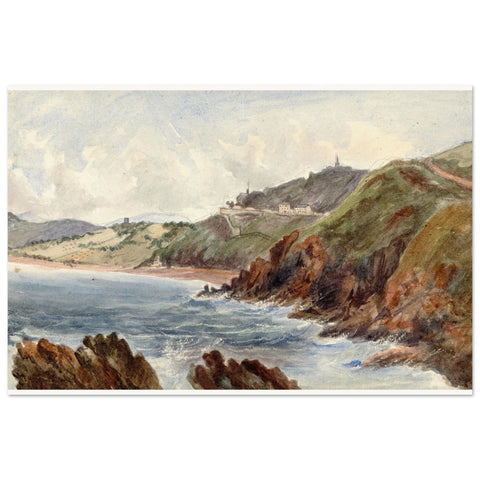
O’Connor was born on Aston’s Quay in Dublin in 1792 and set out for London in 1813 with Francis Danby and George Petrie. The money ran out; Petrie went home, and O’Connor and Danby walked from London to Bristol and arrived penniless. He painted the Dargle and the Wicklow glens early, and in his last decade turned to storm and moonlight. A Thunderstorm: the Frightened Wagoner (1832) and The Poachers (1835) both hang in the National Gallery of Ireland. He died in London in 1841, poor, his sight failing. The late pictures are all the same weather, and they belong on one wall.
The Writers’ Wall (11 prints)
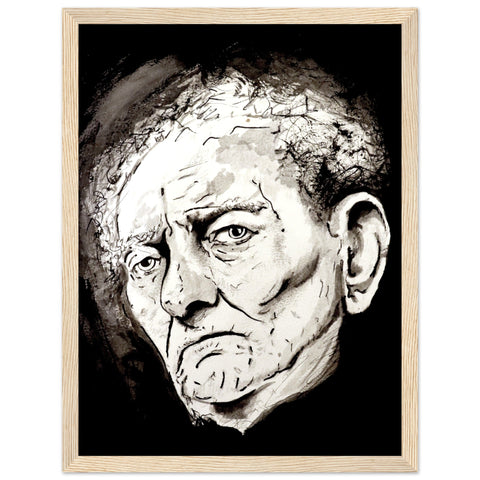
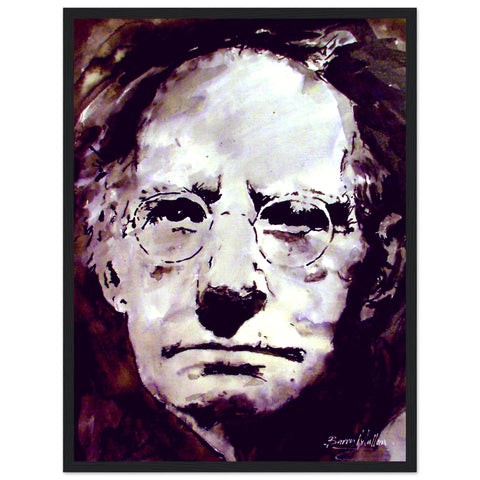
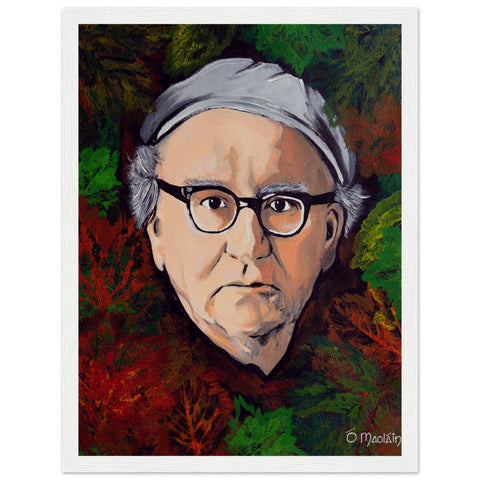
Joyce, Yeats, Beckett, Shaw, O’Casey, Behan, Kavanagh, Heaney, Friel — one hand, one ladder, one register. That is what makes this a hang rather than a set of separate portraits: the sizes match, the frames match, and the faces were drawn to sit beside each other. Three across a hallway is the usual arrangement; six in two rows of three is the other.
Irish Music — The Portraits (10 prints)
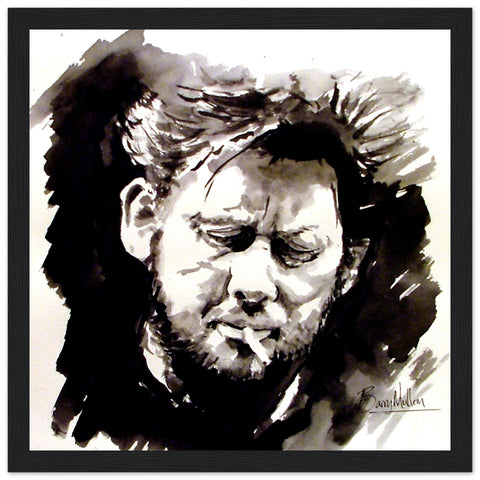


Luke Kelly and Ronnie Drew were both founder members of The Dubliners; Shane MacGowan wrote for the same tradition from London, and Christy Moore, Rory Gallagher, Phil Lynott, Van Morrison and Sinéad O’Connor each took it somewhere else. Painted by one hand on one ladder, in one register, so they hang as a group rather than as separate pictures. Three at matching size is the arrangement that works.
Irish Patriots (10 prints)
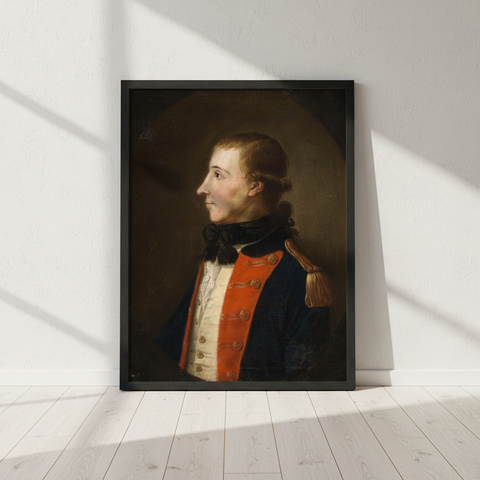
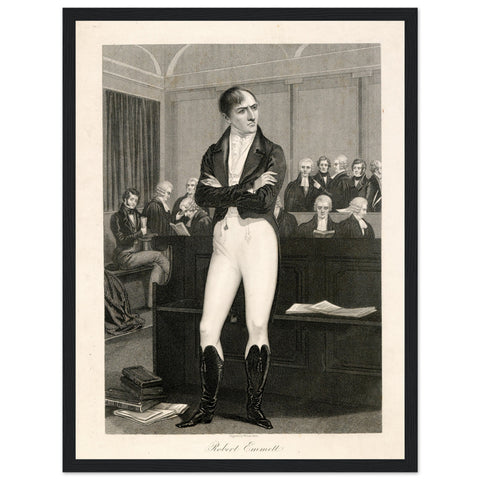
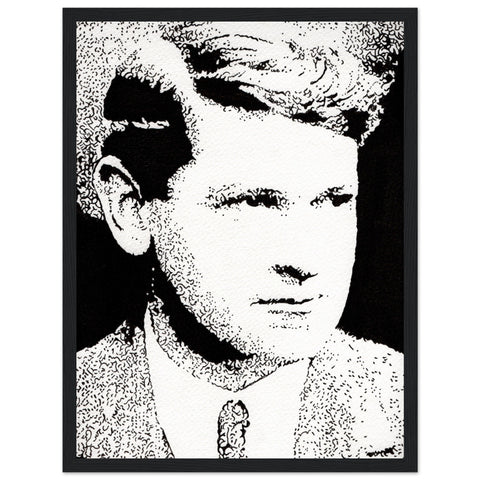
Wolfe Tone, Henry Joy McCracken, Robert Emmet, Roger Casement, Pearse, Markievicz, Collins — a century and a half of the same argument, painted in one register on one ladder. Casement asked to be buried at Murlough Bay on the Antrim coast; he was not, and the plinth of the commemorative cross still stands there. Three across at matching size reads as a sequence rather than a shrine.
The Irish Word Prints (8 prints)
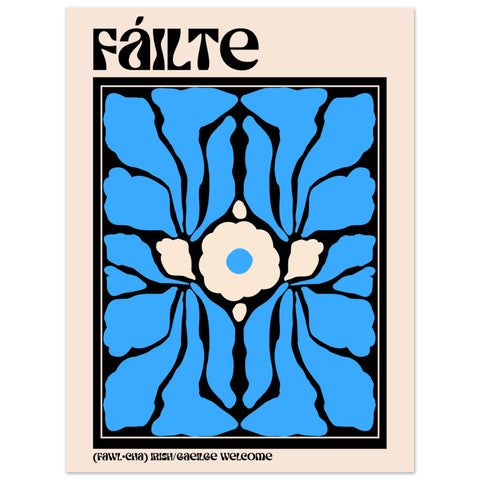
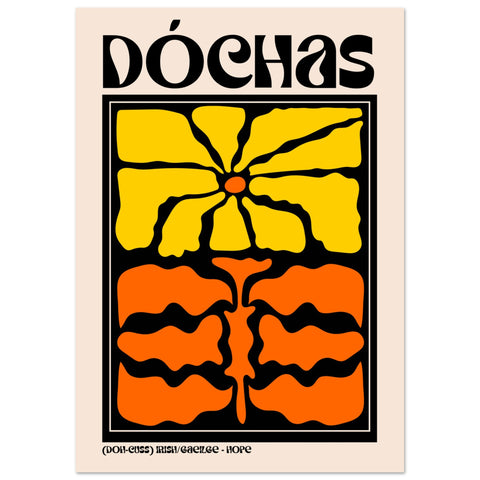
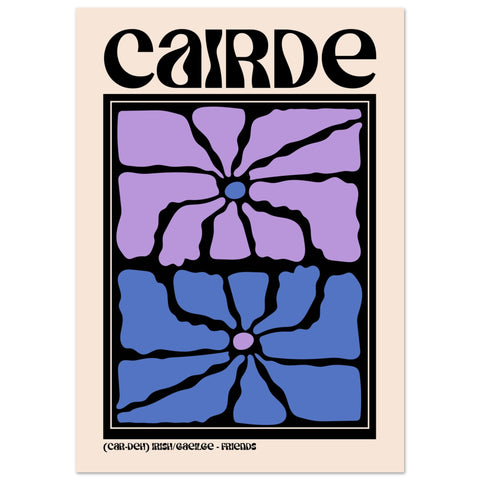
Eight words on one grid — Grá, Sláinte, Fáilte, Clann, Dóchas, Sonas, Cairde, Le Chéile. Same typeface, same margins, same A-size, so they line up exactly, which is the whole point of a typographic set. Two above a door, four in a square over a table, all eight along a hall. One is a decision about a word; three is a decision about a wall.
Irish Proverb Prints (13 prints)
 Your feet will bring you where your heart is
 Praise the young and they will blossom
 A friend’s eye is a good mirror
A seanfhocal is, literally, an old word — speech that survived because it was compressed enough to carry. Set at one size on one grid, these line up as a row, which is how proverbs were always kept: one beside the next, each correcting the last. Three across a kitchen wall is the arrangement; two over a door is the other.
Irish Posters (8 prints)
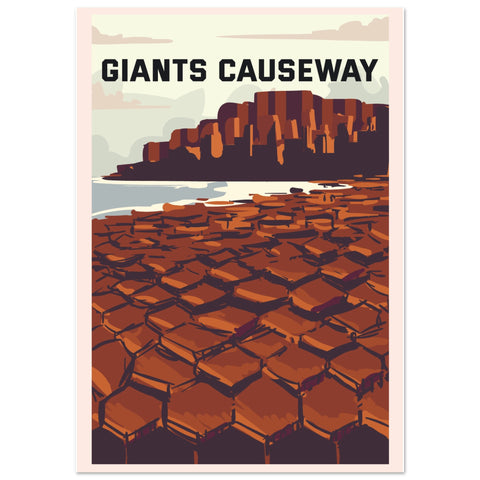
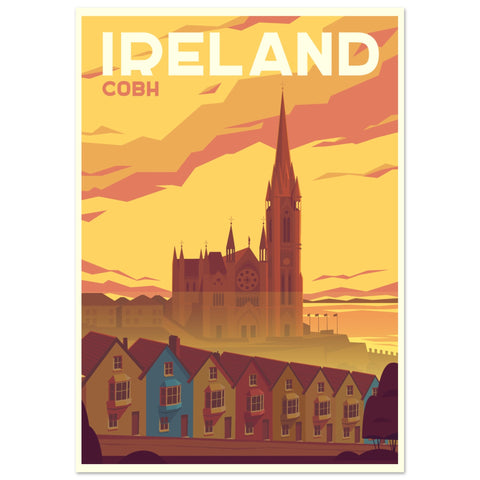
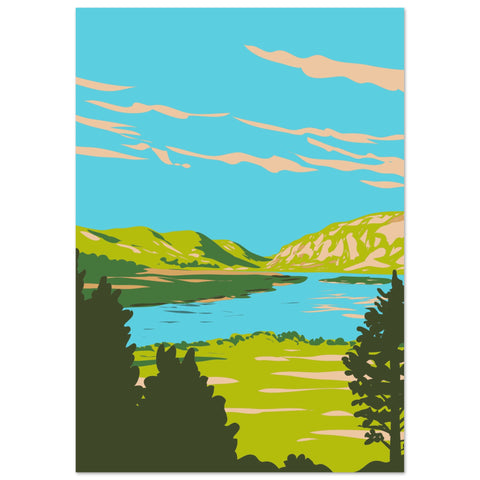
Seven places on one grid — the same A-series, the same margins, so they hang as a row without a ruler. Two side by side over a hall table; three across a landing; the whole coast down a stairwell, one riser at a time.
Black & White Ireland (6 prints)
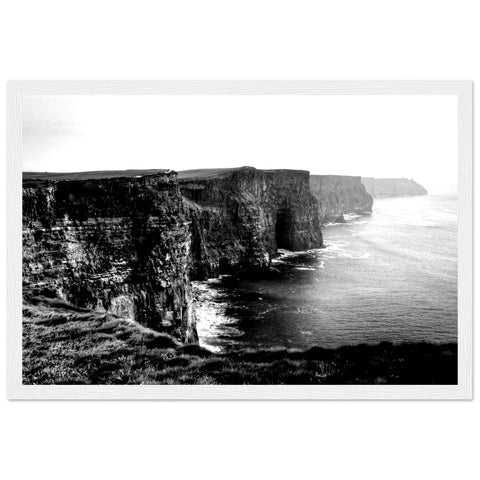

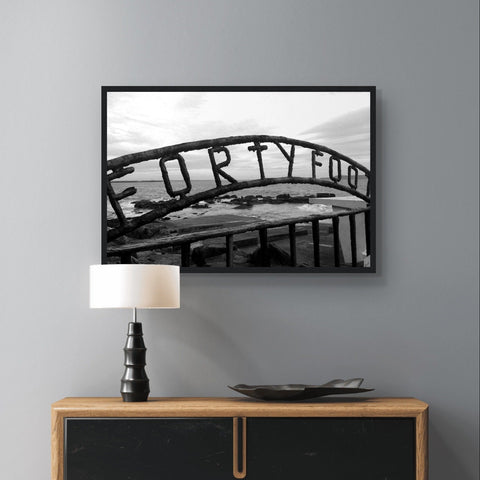
One tonal range, which is why monochrome hangs together in a way colour rarely does. The Ha’penny Bridge opened in May 1816 as Wellington Bridge, cast in eighteen sections at Coalbrookdale in Shropshire and shipped to Dublin; the halfpenny toll it is named for was dropped in 1919. The Forty Foot at Sandycove closes the first chapter of Ulysses — Joyce spells it “fortyfoot hole” — and was a men-only bathing place until a dozen women walked in, in July 1974. Three in monochrome at matching size is the arrangement.
New sets are added as the catalogue grows. If you have bought one print and want to know what hangs beside it, the answer is at the bottom of its page under Hangs well with.